

Wednesday, 06/24/2021
Agus C. – Bogdi Kratom Media Team
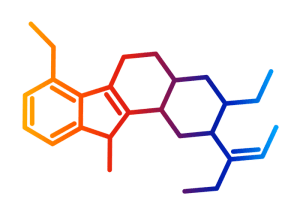
Mitragynine and 7-hydroxymitragynine
Kratom is the common name for Mitragyna speciosa, a tropical evergreen native to the marshy jungles of Southeast Asia. It grows wild in central and southern Thailand, Malaysia, Indonesia, Myanmar, and elsewhere in the Pacific Rim.
Known for its hanging clusters of deep yellow flowers and reaching up to 42 feet (13 meters) in height, kratom has numerous uses in folk medicine. Traditionally, the broad green leaves are plucked by hand and dried in the sun, to be brewed as a tea or pulverized and swallowed with water.
Since the beginning of the 21st century, kratom has increased in visibility around the world. Regular kratom users see it as an invaluable aid for mental and physical health, while others enjoy its dual recreational value as a stimulant or sedative-narcotic (depending on the dose).
How much kratom to take depends on your physiology, tolerance, and other factors. Chances are that as a newbie your tolerance is nil, but there may be a cross-tolerance effect with other opioids.
In any case, the recommended starting dose is one to two grams. If you’re sensitive, you’re probably better off starting with one gram. Ideally, you should measure out your dose on a digital scale. Capsules tend to contain between 350 and 750 mg, so you may need one to three for a starting dose.
The three main ways to take kratom powder (dried ground leaf) are:
The dosage guide on the kratom Reddit wiki suggests waiting 30-45 minutes after your first dose to see how it affects you. Then, if you feel you need more, take up to one more gram. After waiting another 30-45 minutes, take up to one more final gram if desired. And if this dose still fails to satisfy, start with three grams another day and repeat the process from there; don’t take any more on day one. And don’t take more than eight grams on any one day.
You should find your optimal dose pretty soon.
Generally speaking, a moderate dose of plain dried leaf (powdered) is 3-6 g, but anything above 5 g is considered strong. Kratom is usually consumed with fruit juice or water. A popular method is the “toss and wash,” which involves placing the powder in the mouth and chasing it down with a drink.
On an empty stomach, kratom effects are noticeable from around the 15-20 minute mark, gradually building in intensity and peaking for two to four hours. Stronger doses may have a shorter onset.
Lower doses are often more stimulating. They may be characterized by increased motivation, talkativeness, and sociability, along with a feeling of euphoria and physical energy. Some people find the stimulant effects of kratom a little too “edgy” to be pleasant, at least at first. Other disagreeable kratom effects—including sweating, nausea, dizziness, and dysphoria—can also be experienced during the onset period, but they usually give way in time.
At the higher, sedative dose ranges, kratom users report a diminished sensitivity to physical and emotional pain, and a feeling of general contentedness. Some go into a kind of “waking-dreaming” reverie, especially when listening to music. Ethnobotanist and author Daniel Siebert likened this to the state prized by 19th-century Romantics, who used opium to keep one foot in dreamland and the other in the real world.
Additional kratom effects might include mild visuals (both open- and closed-eye), a warming sensation, increased empathy, and possibly sexual arousal. The pupils are likely to constrict if they change size at all.
Many find that sex on kratom lasts longer, but that it can also feel impossible to climax. Erectile enhancement is common, but so is erectile dysfunction. Frequent use and higher doses can substantially diminish libido—sometimes completely. But many seem to enjoy combining sex and kratom; some men take it to increase the enjoyment of their partner even if it means sacrificing their own.
Combining kratom and Suboxone (buprenorphine and naloxone, a common opiate replacement therapy) may seem unavoidable if you’re trying the former to give up the latter. Although it’s not ideal, a careful balance of titration and dose timing can apparently be effective. For more information, see the kratom Reddit group.
Kratom is reportedly a good alternative to Adderall for managing ADD/ADHD. Some also find it helps to relieve an Adderall comedown. While it’s generally unsafe to combine kratom and stimulants, there appear (anecdotally) to be few if any negative kratom side effects with Adderall in particular. However, it may be best to stagger your intake of each, for example by taking kratom several hours after Adderall.
Many people combine kratom and weed for enhanced relaxation effects. The differing pharmacological actions of these substances is said to be positively synergistic. As with other substances, however, you might want to stagger your intake. One recommendation is to eat some food in between taking kratom and cannabis to avoid feeling faint or lightheaded.
Most users take kratom for pain, anxiety, or some other specific condition, but it’s also considered a “plant teacher”—a tool for exploration and growth. Described by one kratom user as a “nurturing mirror,” it can gently draw attention to areas of personal and interpersonal dysfunction. These can be explored within the context of an emotionally honest, “entactogenic” high.
Some kratom users report that kratom can reduce social anxiety, and even improve sexual performance.
Liberated from the confines of everyday thought patterns, people also find greater appreciation for being alive.
There are no mainstream medical uses for kratom, but it shows great therapeutic potential.
Daniel Siebert described it as one of the most effective herbal analgesics, second only to opium. 7-hydroxymitragynine in particular is 13 times more potent than morphine and considerably less addictive. Withdrawal symptoms from kratom are also far milder and more short-lived. Mitragynine, meanwhile, is seen as a potential replacement for codeine, offering comparable analgesic effects without the fatal respiratory depression. Curiously, synthetic mitragynine is less potent than extracted mitragynine.
Kratom could eventually come to replace methadone in the treatment of heroin addiction especially given its relative ease of production, making it ideal for poor and developing countries. Certainly the use of kratom for heroin withdrawal has become common around the world. It can also be helpful for getting off prescription opioids.
It could be a viable alternative to alcohol too, since it promotes relaxation and sociability without the emotional/physical hangover.
At least one study supports the growing use of kratom to manage anxiety and depression. Mice injected with mitragynine were found to have lower levels of corticosterone, a hormone involved in the regulation of stress responses and energy. The open, introspective mindset that kratom creates may also be useful in psychotherapy.
Opinions on the best strains vary. One of the best strains of kratom for depression is reportedly white Maeng Da. Green strains are also supposed to be good. Green and white strains are reportedly the best kratom for anxiety too.
Many people lose weight while using kratom. However, it’s not necessarily an appetite suppressant in itself; some find it makes them eat more. Weight loss may instead be attributed to its anxiolytic or antidepressant effects eliminating cravings for junk food. It also promotes healthy lifestyle changes that lead to weight loss, such as getting more exercise and drinking less alcohol.
Other conditions that kratom shows potential for include diarrhea, chronic pain, inflammation, arthritis, migraines, and even cancer.
It’s not clear when kratom use began, but the practice is thought to be ancient. In its native growing regions, leaves from the plant may be used to numb aches and pains, soothe fevers, treat diarrhea, manage diabetes, and alleviate addiction. They have also been applied as poultices to wounds or spread across the abdomen to drive out worms.
Perhaps the most popular use has been to chew on the leaves for energy—similar to the way coca is used in the Andes. In Thailand, peasant workers have been known to chew up to ten times a day while working outside in the sun.
From at least as far back as the early 19th century in Malaysia, kratom has also been used as a sedative—especially as a replacement for opium.
Amid growing enthusiasm for kratom’s medical potential, the active constituent mitragynine was isolated in 1921 and tested on humans in 1932. It was likened to cocaine for its stimulant effects on the central nervous system.
By the early 1940s, the government of Thailand was seeing a massive decline in opium tax revenue. Evidently, addicts were turning to kratom—an unregulated drug—to manage their withdrawal symptoms. The Kratom Act was passed in August 1943, forbidding anyone from cultivating the plant and ordering all existing specimens destroyed.
Elsewhere, scientific interest prevailed. More than 20 alkaloids were isolated during the 1960s and, in 1994, the second of kratom’s primary active compounds was identified: 7-hydroxymitragynine. The following year saw the first synthesis of mitragynine.
Public awareness of kratom flourished throughout the early 2000s, mainly via online message boards. In 2005, however, both M. speciosa and mitragynine were scheduled in Australia, banning them for sale or possession without a license. Enforcement of the Kratom Act also ramped up in Thailand, where arrests quintupled between 2005 and 2009. In 2012, when Thai police ordered the destruction of hundreds of wild kratom trees in a protected area of forest in Satun Province, locals resisted their attempts.
In the United States, various advocacy and campaign groups, including the American Kratom Association, Botanical Education Alliance, and United Kratom Association, have sprung up to safeguard kratom’s legality. Thanks to efforts like theirs, the DEA was forced to withdraw an August 2016 “notice of intent” to place kratom into Schedule I of the Controlled Substances Act.




Hi, There. Thank you for being here. My name is Lani harfisani, I am the owner of BogdiSupplier. It is such an honor for me to welcome you here.

Help us grow!
Jl. Re. Martadinata
Pontianak City, West Borneo – Indonesia
WhatsApp: +62 881 0819 09258
Email: [email protected]
Bogdisupplier © 2024 All Rights Reserved. Terms of Use and Privacy Policy.